


Bananas are popular because they taste sweet, travel well, and fit easily into meals and snacks. Yet many people pause when they notice the little black dots inside a banana. These tiny marks may look like seeds, but they have a different origin. They are a normal part of the banana’s biology and do not make the fruit unsafe to eat.
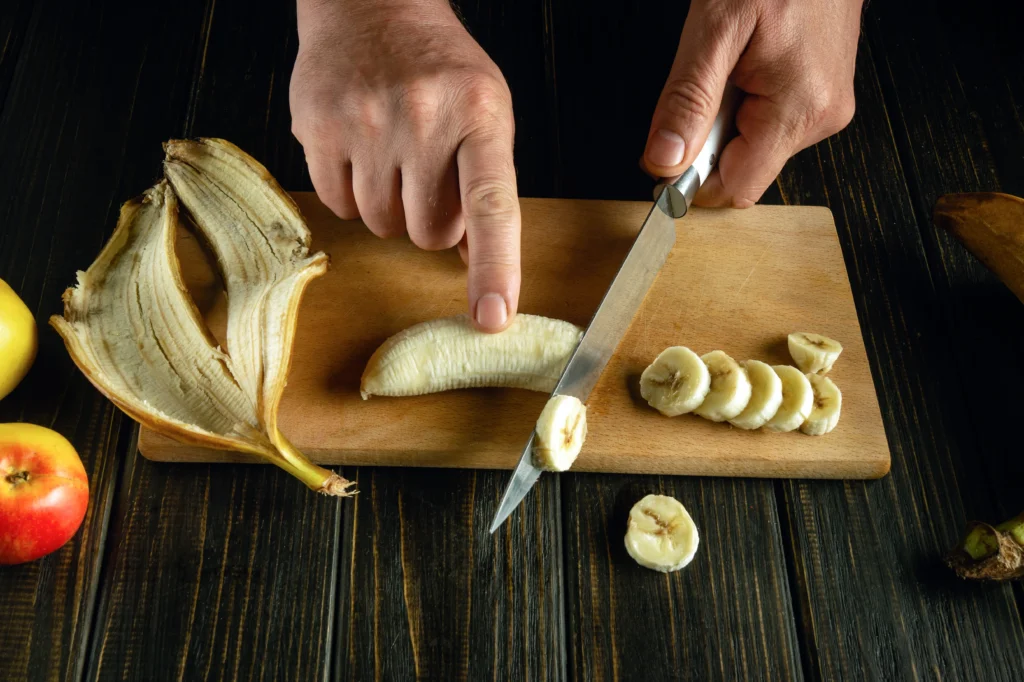
In this guide, you will learn what these dots are, why store-bought bananas usually lack hard seeds, and how banana plants reproduce. You will also see why bananas remain one of the most useful fruits for everyday eating.
What Are The Little Black Dots Inside A Banana?
The little black dots inside a banana are usually unfertilized ovules. An ovule is a small structure in a flower that could become a seed after fertilization. In common eating bananas, fertilization does not occur, so these structures remain tiny and dark.
Therefore, the dots are not mature seeds like the hard seeds found in some wild bananas. They are a natural result of the way many cultivated bananas grow.
- Appearance: Tiny black or dark brown specks near the center of the fruit.
- Cause: Unfertilized ovules that did not develop into full seeds.
- Safety: A normal feature of common edible bananas.
- Texture: Usually too small to notice while eating.
Why The Dots Can Cause Confusion
Because the marks sit where seeds might appear, it is easy to assume they are seeds. However, cultivated bananas have been selected over generations for soft flesh and minimal seed development. As a result, the fruit you buy has only tiny remnants rather than large, hard seeds.
Why Do Common Bananas Have No Hard Seeds?
The little black dots inside a banana appear because common bananas develop without normal fertilization. This quality is called parthenocarpy, which means a fruit forms without fertilization.
Parthenocarpy can happen naturally or through plant cultivation. It allows the fruit to grow with few or no mature seeds. Consequently, bananas such as the familiar Cavendish variety remain smooth and easy to eat.
| Banana type | Typical seed condition | Eating experience |
|---|---|---|
| Common cultivated bananas | Tiny unfertilized ovules | Soft fruit with no hard seeds |
| Wild bananas | Large, developed seeds | Harder and less convenient to eat |
Commercial varieties reproduce without useful seeds. Instead, growers maintain plants through other forms of propagation. This approach supports consistent fruit traits across banana crops.
How Banana Plants Reproduce Without Seeds
The little black dots inside a banana do not help create a new plant. Instead, banana plants commonly reproduce through vegetative propagation. This means a new plant grows from part of an existing plant rather than from a seed.
Suckers From The Main Plant
Banana plants produce shoots called suckers near the base of the main plant. A grower can separate a healthy sucker and replant it. Over time, that shoot develops into another banana plant.
Growth Through Rhizomes
A rhizome is a stem that grows underground. Banana rhizomes send out roots and new shoots. Therefore, they allow the plant to produce fresh growth beneath the soil.
In Vitro Plant Production
Large-scale growers may also use in vitro propagation. This method grows plants from small pieces of plant tissue in controlled conditions. It requires more work and expense, but it can provide many plants with desired traits and a more uniform crop.
| Propagation method | What happens | Result |
|---|---|---|
| Suckers | Shoots grow from the plant base | A new banana plant |
| Rhizomes | Underground stems produce roots and shoots | New plant growth |
| In vitro propagation | Plant tissue grows under controlled conditions | Uniform plants for cultivation |
Do All Bananas Lack Seeds?
The little black dots inside a banana are common in cultivated fruit, but not every banana is seedless. Wild bananas can contain large, hard seeds. These seeds make the fruit much less pleasant to eat than the soft bananas sold in most markets.
One example is Musa balbisiana, a wild banana used in breeding work. Its traits can support efforts to develop banana hybrids, including plants with useful qualities such as disease resistance.
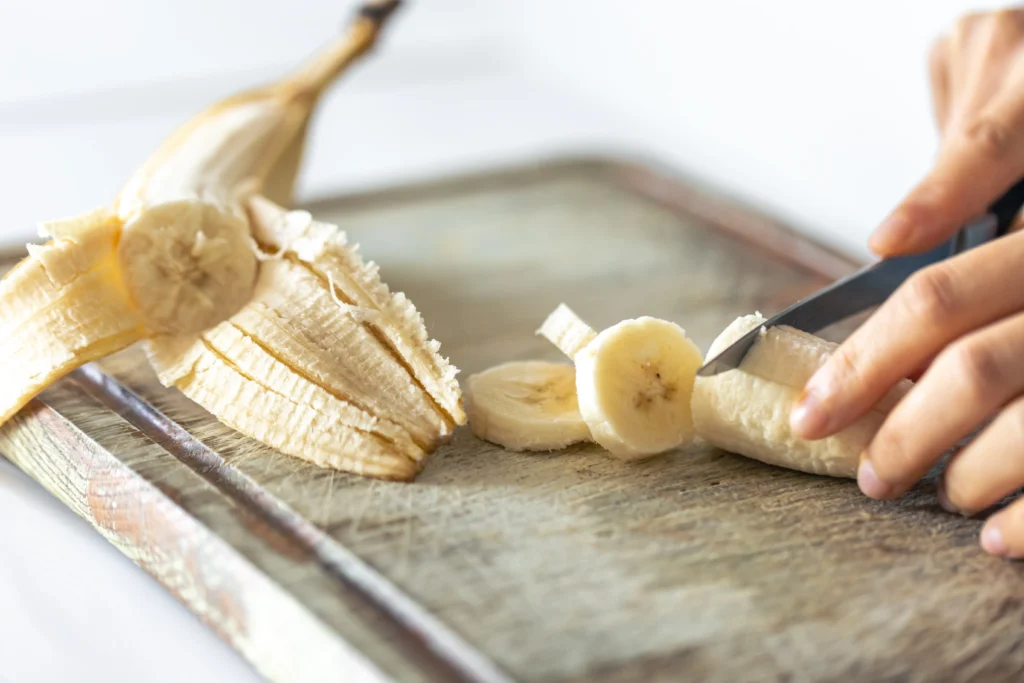
- Store-bought bananas: Usually have soft flesh and no large seeds.
- Wild bananas: May contain many large, firm seeds.
- Breeding varieties: Can contribute traits to future banana hybrids.
What Nutrients Do Bananas Provide?
The little black dots inside a banana do not change the fruit’s main nutritional value. Bananas provide carbohydrates, fiber, and several vitamins and minerals. Therefore, they can serve as a convenient part of a balanced eating pattern.
| Nutrient | Role in the body |
|---|---|
| Potassium | Helps support normal blood pressure and heart function. |
| Vitamin C | Supports immune function and skin health. |
| Vitamin B6 | Helps support brain function and other body processes. |
| Dietary fiber | Supports digestion and may help you feel full. |
| Carbohydrates | Provide a readily available source of energy. |
Bananas also work well in many eating styles. You can enjoy one fresh, blend it into a smoothie, or use it in baked foods such as banana bread.
Where Did Bananas Come From?
The little black dots inside a banana are part of a fruit with a long agricultural history. Researchers connect the banana’s early origins with Southeast Asia, including areas near southern China and Papua New Guinea.
However, the exact starting point is difficult to identify. People have grown and moved bananas across regions for a very long time. As a result, their history involves many places and cultivated forms.
Where The Word “Banana” May Come From
The word “banana” is thought to have African roots. It may come from languages used in areas such as Liberia and Sierra Leone. Later, the word entered European languages during the colonial period and retained a similar form in languages including English and Portuguese.
How Banana Propagation Works
The little black dots inside a banana show what happens inside the fruit, while propagation explains how the plant continues. The chart below summarizes the movement from the parent plant to new growth.
| Node | Description | Leads to |
|---|---|---|
| A: Mother banana plant | The original plant | B: Rhizome growth and C: Sucker development |
| B: Rhizome growth | Growth from the underground stem | D: New banana plant |
| C: Sucker development | A shoot grows near the plant base | D: New banana plant |
| D: New banana plant | A separate plant forms | – |
In simple terms, the mother plant produces new growth through its underground rhizome or nearby suckers. Growers can then use that growth to establish another plant.
Why Are Bananas So Popular?
The little black dots inside a banana rarely affect its appeal. Most people value bananas because they offer a portable snack, a naturally sweet taste, and many uses in the kitchen.
- Easy to carry: The peel acts as natural packaging.
- Simple to eat: You can peel the fruit without tools or preparation.
- Flexible in recipes: Bananas work in smoothies, desserts, and baked foods.
- Available through the year: Tropical growing regions help supply many markets.
- Useful for energy: Their carbohydrates provide a convenient source of fuel.
Furthermore, the lack of hard seeds makes cultivated bananas especially practical. You can eat the fruit fresh without removing anything from the flesh.
Frequently Asked Questions About Banana Dots
Are The Little Black Dots Inside A Banana Dangerous?
No. The little black dots inside a banana are usually unfertilized ovules, a normal part of the fruit. They do not indicate that the banana contains harmful material.
Are The Dots Really Banana Seeds?
They are not mature seeds in common cultivated bananas. Instead, they are small ovules that did not develop after fertilization failed to occur.
Do Wild Bananas Have Large Seeds?
Yes. Wild bananas can contain large, hard seeds. For that reason, they are less convenient to eat than the seedless or nearly seedless varieties commonly sold in stores.
How Do Bananas Grow If They Have No Seeds?
Banana plants grow through vegetative propagation. Suckers and underground rhizomes produce new plants. Commercial growers may also use in vitro methods to raise uniform plants.
Can You Eat A Banana With Black Dots Inside?
Yes. The small dots inside the flesh are a normal feature of many bananas. You can eat the fruit as usual when its smell, texture, and outer condition appear normal.
The Simple Answer About Banana Dots
The little black dots inside a banana are generally unfertilized ovules, not mature seeds. Common cultivated bananas form fruit without normal fertilization, while wild bananas may develop large seeds.
Therefore, the next time you see these tiny marks, you can view them as evidence of the banana’s unusual biology. They also reflect generations of cultivation that produced the soft, convenient fruit enjoyed around the world.

Lamartine P is a health and wellness researcher focused on supplements, lifestyle, and evidence-based content. Enthusiastic researcher and content creator specializing in evidence-based supplement reviews. With over 4 years of experience analyzing dietary supplements. He analyzes products, studies market trends, and translates complex information into practical insights to help readers make informed decisions.
Affiliate disclosure: This review may contain affiliate links. If you purchase a product through one of these links, we may receive a commission at no additional cost to you. This does not affect the price you pay or the standards we use when reviewing products.
Medical disclaimer: The products discussed on this website are dietary supplements and are not intended to diagnose, treat, cure, or prevent any disease. These products are not substitutes for professional medical advice or prescribed treatments. Always consult a qualified healthcare professional before starting any new supplement, especially if you have a medical condition, are pregnant or breastfeeding, or take prescription medications.