

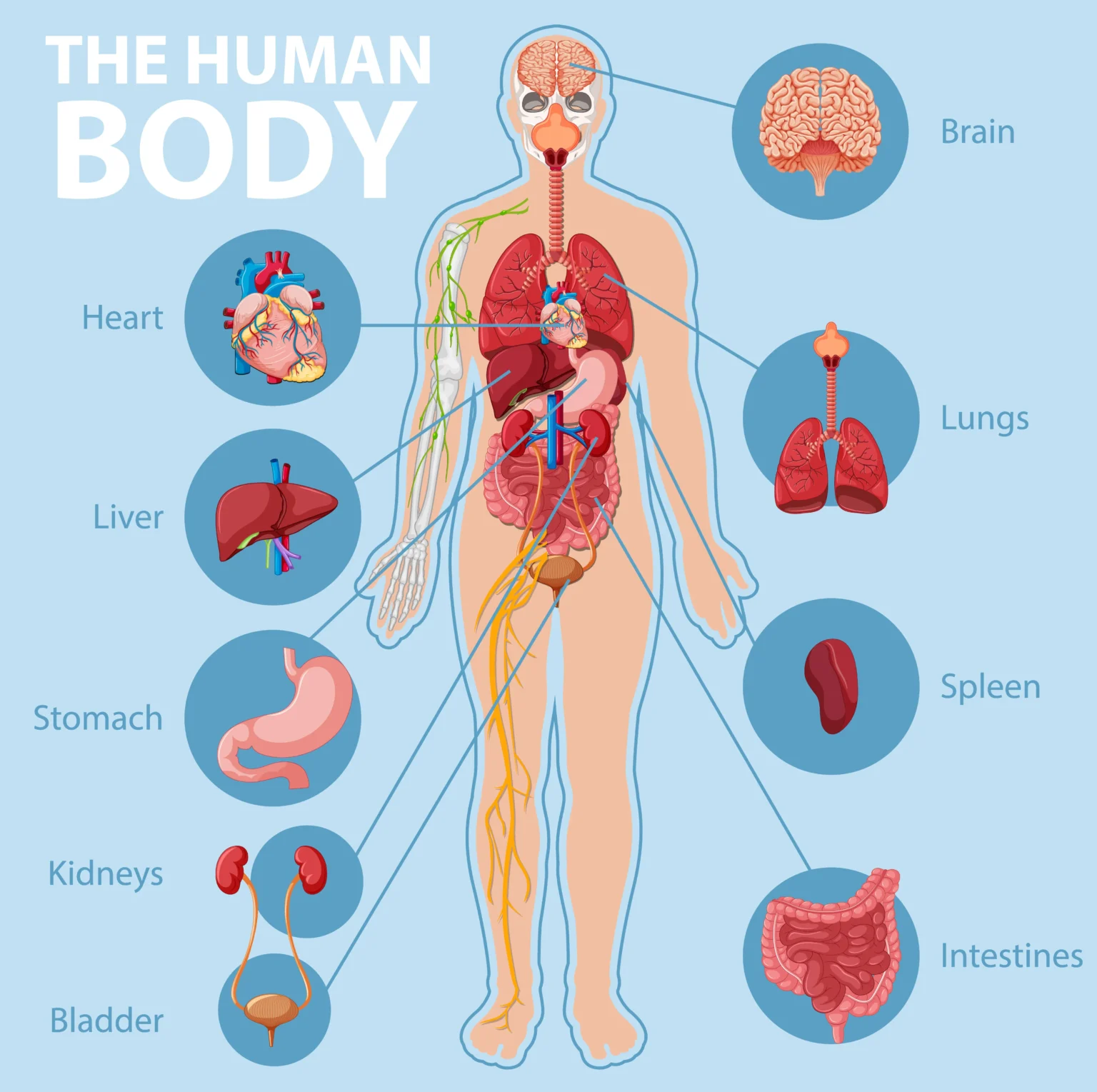
The human body is a remarkable living system built from organs, tissues, cells, and connected networks. Although modern medicine continues to explain more about anatomy, many body functions still inspire wonder. Each organ performs a special role, yet none works alone. Together, these systems support movement, thought, protection, breathing, digestion, and life itself.
From the brain’s ability to adapt to the heart’s steady rhythm, the body shows impressive efficiency. The following guide highlights major organs and explains how they contribute to your health in clear, practical terms.
How The Human Body’s Brain Directs Daily Life
The human body depends on the brain as its central command center. This complex organ guides movement, thought, memory, emotions, and many automatic processes. It contains about 86 billion neurons. Neurons are specialized cells that send signals through electrical and chemical messages.
One of the brain’s most valuable features is neuroplasticity. This term describes the brain’s ability to adjust its connections over time. Therefore, learning can strengthen new pathways. This flexibility also supports recovery after some injuries as the brain forms alternative routes.
Key Brain Insight
- An active brain uses energy efficiently.
- Its changing connections support learning throughout life.
- New neural pathways may help the brain adapt after injury.
This adaptability explains why practice, education, and repeated skills can gradually improve performance.
The Human Body’s Heart Keeps Blood Moving
The human body relies on the heart from the first beat onward. This muscular organ contracts continuously to move blood through an extensive vessel network. Blood carries oxygen and nutrients to cells, while circulation also helps support the removal of waste.
The heart beats about 100,000 times each day. Its blood vessels extend for roughly 96,000 kilometers. Taken together, this network shows how much work the circulatory system performs without interruption.
| Heart Function | Why It Matters |
|---|---|
| Pumps blood | Moves oxygen and nutrients throughout the body |
| Supports circulation | Connects the heart with tissues and organs |
| Works continuously | Maintains supply from birth through life |
Furthermore, the total distance traveled by blood through the vessels each day is compared with circling Earth about 2.5 times.
The Human Body’s Skin Forms A Living Shield
The human body uses the skin as its largest organ and first outer barrier. It helps guard deeper tissues against microorganisms, ultraviolet radiation, and physical harm. At the same time, the skin constantly renews itself.
Skin regeneration takes about 27 days. During this process, older cells move away from the surface and new cells replace them. In addition, an average person sheds around 40,000 dead skin cells each minute.
Why Skin Renewal Matters
- It supports the skin’s protective barrier.
- It removes older surface cells.
- It helps the body maintain healthy outer tissue.
Consequently, skin care involves more than appearance. The skin remains an active part of the body’s protection system.
The Human Body’s Immune System Provides Defense
The human body depends on the immune system to respond to infections and disease. This defense network includes white blood cells and specialized responses. It can distinguish harmful invaders from the body’s own cells, helping maintain protection.
Blood also contains several components that work together. A single drop includes approximately 5 million red blood cells, 8,000 white blood cells, and 250,000 platelets. Red blood cells, white blood cells, and platelets each support different needs.
| Blood Component | Main Role |
|---|---|
| Red blood cells | Form part of the blood’s transport system |
| White blood cells | Support immune defense |
| Platelets | Contribute to the body’s blood response |
Therefore, immune health depends on a coordinated network rather than a single organ.
How The Human Body’s Lungs Exchange Oxygen
The human body uses the lungs to manage oxygen exchange. Air travels through branching airways until it reaches tiny structures called alveoli. Alveoli are small air sacs where oxygen moves into the blood and carbon dioxide leaves it.
When fully stretched, the lungs have a surface area compared with a tennis court. This broad area supports efficient gas exchange. As a result, the respiratory system can help supply oxygen needed by cells throughout the body.
Respiratory System At A Glance
- Airways carry air into the lungs.
- Alveoli support oxygen and carbon dioxide exchange.
- Blood transports oxygen beyond the lungs.
The Human Body’s Eyes Turn Light Into Sight
The human body depends on the eyes to receive and process visual information. These organs detect more than 10 million colors. Each eye also contains more than 2 million working parts, allowing vision to feel smooth and immediate.
The eyes do more than collect light. They work with the brain to interpret images, shapes, movement, and color. Hence, sight depends on cooperation between the visual organs and the nervous system.
This close connection helps explain why the eyes are often described as a window to the world. They convert incoming light into information that the brain can understand.
The Human Body’s Liver Handles Many Essential Tasks
The human body relies on the liver for more than 500 essential tasks. These include detoxification, protein synthesis, and support for digestion. Detoxification refers to the liver’s role in processing substances so the body can manage them.
The liver also has an unusual ability to regenerate. Even when 75% of its mass is removed, it can grow back. However, this fact does not make liver damage harmless. The organ still deserves careful support and protection.
Liver Function Summary
- Processes substances in the blood.
- Supports digestion.
- Helps produce proteins.
- Regenerates after major loss of mass.
About 1.4 liters of blood pass through the liver each minute. This steady flow supports its work throughout the body.
Diagram: How Major Body Systems Connect
The human body works through linked systems rather than isolated parts. The table below shows how major organs and networks support one another.
| Source | Target | Description |
|---|---|---|
| Brain | Central Nervous System | Forms a central part of the nervous system |
| Heart | Circulatory System | Supports blood circulation |
| Lungs | Respiratory System | Supports oxygen exchange |
| Skin | Immune System | Provides an outer protective barrier |
| Liver | Digestive System | Supports digestion and detoxification |
| Immune System | Defense Mechanisms | Provides the body’s defense network |
| Respiratory System | Oxygen Supply | Delivers oxygen to the body |
| Circulatory System | Distribution of Nutrients | Transports nutrients |
Frequently Asked Questions About The Human Body
What makes the human body so complex?
The human body contains many organs and systems that perform separate tasks while sharing information and resources. The brain, heart, lungs, skin, immune system, eyes, and liver all contribute to one connected living network.
Which organ contains about 86 billion neurons?
The brain contains approximately 86 billion neurons. These cells communicate through signals and help control thought, movement, learning, and other functions.
How often does the skin renew itself?
Skin regenerates approximately every 27 days. During this cycle, older surface cells leave as newer cells take their place.
What is neuroplasticity?
Neuroplasticity is the brain’s ability to change and adjust its connections. It supports learning and may help create new pathways after some injuries.
How many tasks does the liver perform?
The liver performs more than 500 essential tasks. Its roles include supporting digestion, protein synthesis, and detoxification.
Why do the lungs have such a large surface area?
The lungs contain airways and alveoli that create a broad exchange area. When fully stretched, their surface area is compared with a tennis court, supporting oxygen movement into the blood.
Why The Human Body Deserves Care And Respect
The human body demonstrates resilience through constant teamwork. The brain adapts, the heart circulates blood, the lungs exchange gases, and the skin renews its barrier. Meanwhile, the liver and immune system manage vital support and defense.
Understanding these connections can encourage greater respect for everyday health. Every organ has value, and every system contributes to the body’s remarkable ability to function as one living whole.

Lamartine P is a health and wellness researcher focused on supplements, lifestyle, and evidence-based content. Enthusiastic researcher and content creator specializing in evidence-based supplement reviews. With over 4 years of experience analyzing dietary supplements. He analyzes products, studies market trends, and translates complex information into practical insights to help readers make informed decisions.
Affiliate disclosure: This review may contain affiliate links. If you purchase a product through one of these links, we may receive a commission at no additional cost to you. This does not affect the price you pay or the standards we use when reviewing products.
Medical disclaimer: The products discussed on this website are dietary supplements and are not intended to diagnose, treat, cure, or prevent any disease. These products are not substitutes for professional medical advice or prescribed treatments. Always consult a qualified healthcare professional before starting any new supplement, especially if you have a medical condition, are pregnant or breastfeeding, or take prescription medications.