

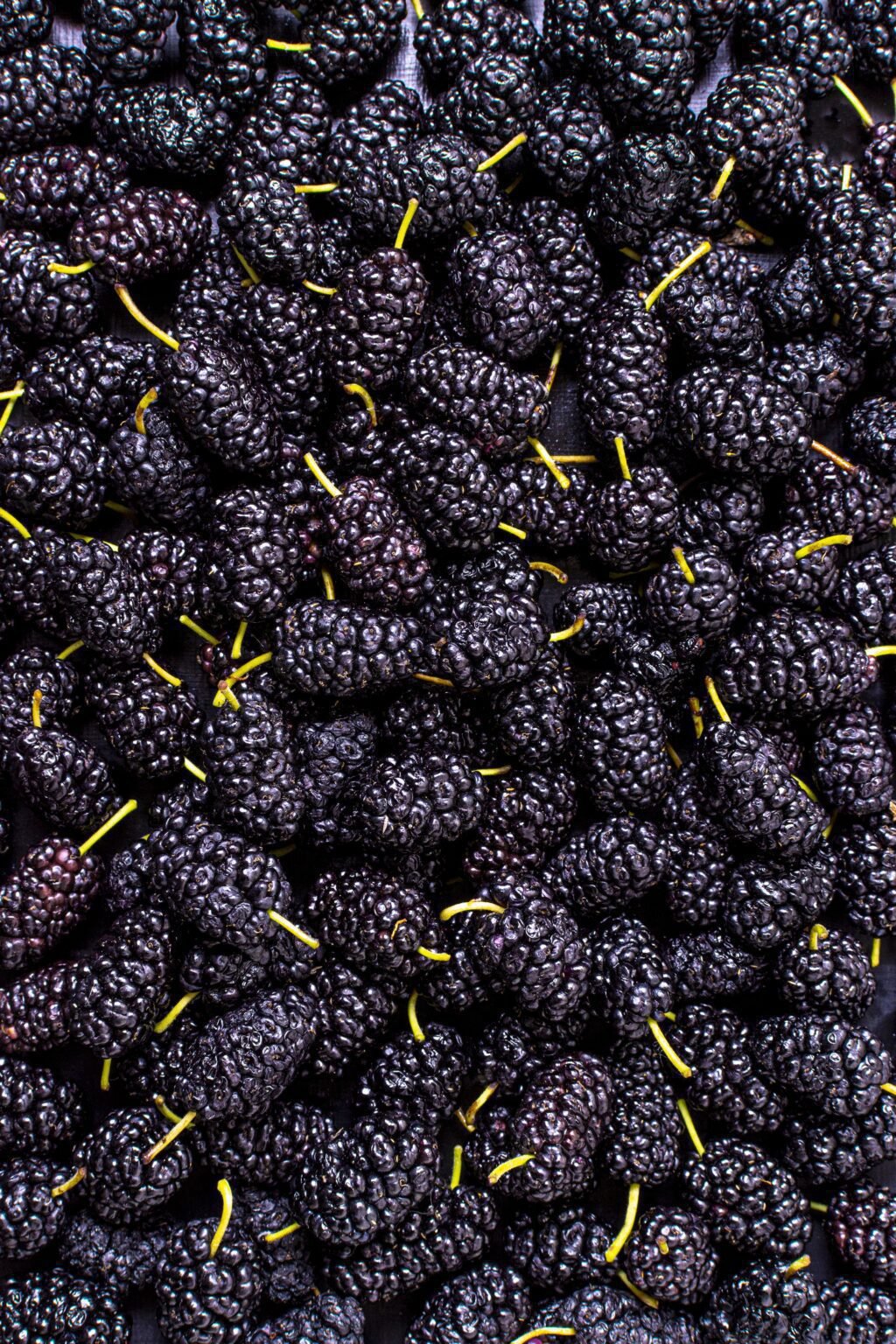
Mulberries offer a sweet, tangy flavor alongside fiber, vitamins, minerals, and plant antioxidants. They are usually in season from September through November. You can enjoy the fresh fruit in snacks, drinks, desserts, and simple meals. The leaves also have traditional food uses, especially as tea or a cooked side dish.
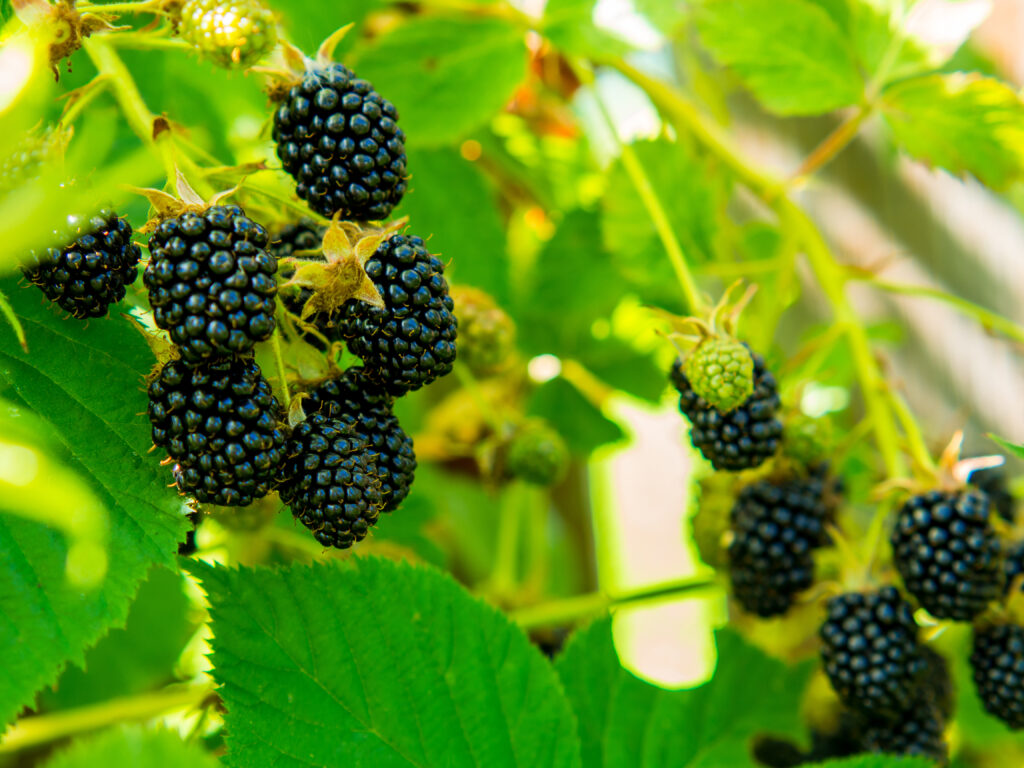
Mulberries Nutrition At A Glance
Mulberries provide modest calories while adding useful nutrients to your meals. A 100-gram serving contains about 43 calories, 10 grams of carbohydrates, and 1.5 grams of protein. Furthermore, the fruit supplies dietary fiber, which supports regular digestion and may help you feel full.
- Vitamins: Vitamin C, Vitamin A, and Vitamin K
- Minerals: Iron, calcium, magnesium, and manganese
- Plant compounds: Anthocyanins, flavonoids, and other antioxidants
- Calories: Approximately 43 kcal per 100 grams
The leaves also contain Vitamin E, flavonoids, and antioxidants. Therefore, they can add variety to your diet when prepared correctly.
Potential Health Benefits Of Mulberries
Mulberries may support several areas of health because they combine fiber, Vitamin C, and protective plant compounds. However, they should support a balanced eating pattern rather than replace medical care or prescribed treatment.
Heart And Antioxidant Support
Mulberries contain anthocyanins and flavonoids. These are natural plant compounds that help protect cells from oxidative stress, a process linked with cell damage. Their nutrient profile may therefore complement heart-friendly eating habits.
A balanced diet, regular movement, and blood pressure care remain important. If you already manage high blood pressure, speak with a qualified health professional before changing your routine. You can also read about blood pressure and daily health choices.
Immune System Support
Vitamin C helps the body support normal immune function. Mulberries provide this vitamin, so adding them to yogurt, oatmeal, or a smoothie can increase the variety of fruit in your diet.
Nevertheless, no single food prevents every infection. Good sleep, suitable medical care, and an overall nutrient-rich diet still matter. Learn more about immune-supporting nutrition and everyday wellness choices.
Digestive Health
The fiber in mulberries can help support regular bowel movements. Fiber also adds bulk to food, which may improve digestive comfort when you increase intake gradually and drink enough fluid.
If your usual diet contains little fiber, start with a small serving. A sudden increase may cause gas or discomfort. Persistent constipation, pain, or diarrhea requires medical advice.
Weight Management Support
Mulberries are relatively low in calories and contain fiber. As a result, they may help you build satisfying meals without adding large amounts of energy. Their naturally sweet taste can also make fruit a useful alternative to heavily sweetened snacks.
However, the fruit does not cause weight loss by itself. Portion size, total food intake, activity, sleep, and health conditions all affect weight. Explore related information about blood sugar and weight support.
Mulberry Leaves And Their Uses
Mulberry leaves offer a different way to use the plant. They contain Vitamin E, flavonoids, and other plant compounds. In traditional food use, people prepare the leaves as tea or cook them before eating.
- Tea: Steep dried leaves in hot water for a simple drink.
- Cooked side dish: Steam or sauté the leaves instead of eating them raw.
- Traditional wellness use: Leaf tea is often associated with digestive comfort and women’s wellness.
Some sources describe mulberry leaves as helpful for menopause, premenstrual symptoms, mood changes, or bloating. These uses should not replace professional care, especially when symptoms are severe or new. Read more about menopause symptom support.
How To Prepare The Leaves
Avoid eating raw mulberry leaves. Instead, choose one of these preparations:
- Brew them into a hot or iced tea.
- Steam them until tender.
- Sauté them with garlic and olive oil.
Preparation makes the leaves more suitable for eating and adds practical variety to meals. When trying leaf tea for the first time, use a small amount and watch for any unusual reaction.
Are Mulberries Useful For Weight Loss?
Mulberries may fit a weight-management plan because they provide fiber and have a low glycemic profile. A low-glycemic food tends to raise blood sugar more slowly than foods with a higher glycemic effect. Therefore, the fruit may help create a more satisfying snack.
- Pair the fruit with plain Greek yogurt for protein.
- Add it to oatmeal for fiber and natural sweetness.
- Use a measured portion in smoothies or desserts.
The best results come from a consistent eating pattern. Keep added sugar and oversized portions in check, and ask a health professional for personalized guidance if you have diabetes or take glucose-lowering medicine.
Easy Ways To Eat Mulberries
Mulberries work well in both fresh and cooked dishes. Their sweet-tart taste pairs with yogurt, bananas, strawberries, grains, and baked foods. Furthermore, frozen fruit can be blended into drinks when fresh berries are unavailable.
| Use | Simple Idea |
|---|---|
| Breakfast | Stir into yogurt, oatmeal, or granola. |
| Drinks | Blend with banana, strawberries, yogurt, or almond milk. |
| Desserts | Add to muffins, cakes, pies, ice cream, or pancakes. |
| Refreshments | Infuse water or lemonade with the fresh fruit. |
| Leaves | Prepare as tea or sauté with garlic and olive oil. |
When you use the fruit in sweet recipes, taste the mixture before adding extra sugar. The berries may provide enough flavor on their own.
Three Mulberry Recipes To Try
These recipes use the ingredients and preparation methods associated with common mulberry dishes. You can serve the smoothie chilled, enjoy the tea warm, and bake the cake for breakfast or dessert.
Mulberry Smoothie
Ingredients:
- 1 cup fresh mulberries
- 1 banana
- ½ cup Greek yogurt
- 1 cup almond milk
Instructions:
- Place every ingredient in a blender.
- Blend until the mixture becomes smooth and creamy.
- Serve chilled.
Mulberry Leaf Tea
Ingredients:
- 1 tablespoon dried mulberry leaves
- 1 cup boiling water
- 1 teaspoon honey, if desired
Instructions:
- Pour boiling water over the dried leaves.
- Allow the tea to steep for 5 to 7 minutes.
- Strain the drink and add honey if preferred.
Mulberry And Cornmeal Cake
Ingredients:
- 2 cups cornmeal
- 1 cup fresh mulberries
- ½ cup sugar
- 2 eggs
- 1 cup milk
Instructions:
- Heat the oven to 180°C (350°F).
- Combine all ingredients until evenly mixed.
- Pour the batter into a greased pan.
- Bake for 30 to 35 minutes.
Safety And Serving Considerations
Mulberries can fit many diets, but large amounts may cause digestive discomfort. Possible problems include nausea or diarrhea. Therefore, begin with a moderate serving, especially if your body is not used to much fiber.
The source guidance limits mulberry leaf tea to one tablespoon of dried leaves per day because higher intake may affect calcium absorption. Also, avoid raw leaves and use care with honey or sugar if you monitor blood glucose.
- Start with a modest serving of fresh fruit.
- Do not treat mulberries as a replacement for prescribed care.
- Ask a clinician about leaf tea during pregnancy, breastfeeding, or medication use.
- Stop using the product if you develop an allergic or unusual reaction.
Frequently Asked Questions About Mulberries
Mulberries can be a convenient fruit for snacks, breakfast, drinks, and desserts. The answers below summarize the main practical points for safe use.
When Are Mulberries In Season?
Mulberries are described as being in season from September through November. Availability can vary by location and growing conditions, so fresh fruit may not appear at the same time everywhere.
Can You Eat Mulberry Leaves Raw?
No. The recommended approach is to brew dried leaves as tea or cook them by steaming or sautéing. Raw leaves should be avoided.
Do Mulberries Help With Weight Loss?
Mulberries may support a weight-management plan because they contain fiber and have a low glycemic profile. However, they do not cause weight loss alone. Your full eating pattern and lifestyle remain more important.
How Much Mulberry Leaf Tea Should You Drink?
The guidance provided limits tea to one tablespoon of dried leaves per day. This limit may help reduce concerns about adverse effects on calcium absorption.
What Is The Easiest Way To Eat Mulberries?
Eat them fresh as a snack, or add them to yogurt, oatmeal, or granola. You can also blend them with banana, strawberries, Greek yogurt, and almond milk for a quick smoothie.
Mulberries bring color, flavor, fiber, and useful nutrients to everyday meals. With sensible portions and properly prepared leaves, they offer a flexible way to add variety to snacks, drinks, breakfasts, and desserts. Explore related fruit health benefits as you build a balanced diet.

Lamartine P is a health and wellness researcher focused on supplements, lifestyle, and evidence-based content. Enthusiastic researcher and content creator specializing in evidence-based supplement reviews. With over 4 years of experience analyzing dietary supplements. He analyzes products, studies market trends, and translates complex information into practical insights to help readers make informed decisions.
Affiliate disclosure: This review may contain affiliate links. If you purchase a product through one of these links, we may receive a commission at no additional cost to you. This does not affect the price you pay or the standards we use when reviewing products.
Medical disclaimer: The products discussed on this website are dietary supplements and are not intended to diagnose, treat, cure, or prevent any disease. These products are not substitutes for professional medical advice or prescribed treatments. Always consult a qualified healthcare professional before starting any new supplement, especially if you have a medical condition, are pregnant or breastfeeding, or take prescription medications.