



Learning how to plant and grow chayote can give you a steady supply of a crisp, useful vegetable at home. With sunlight, fertile soil, regular water, and strong support for its vines, you can raise a healthy plant and harvest firm chayotes in about three to four months.
Chayote (Sechium edule) is a climbing plant suited to tropical and subtropical conditions. It can also grow where temperatures are moderate. Because its vines spread widely, careful planning helps you use garden space well and reach the fruit more easily.
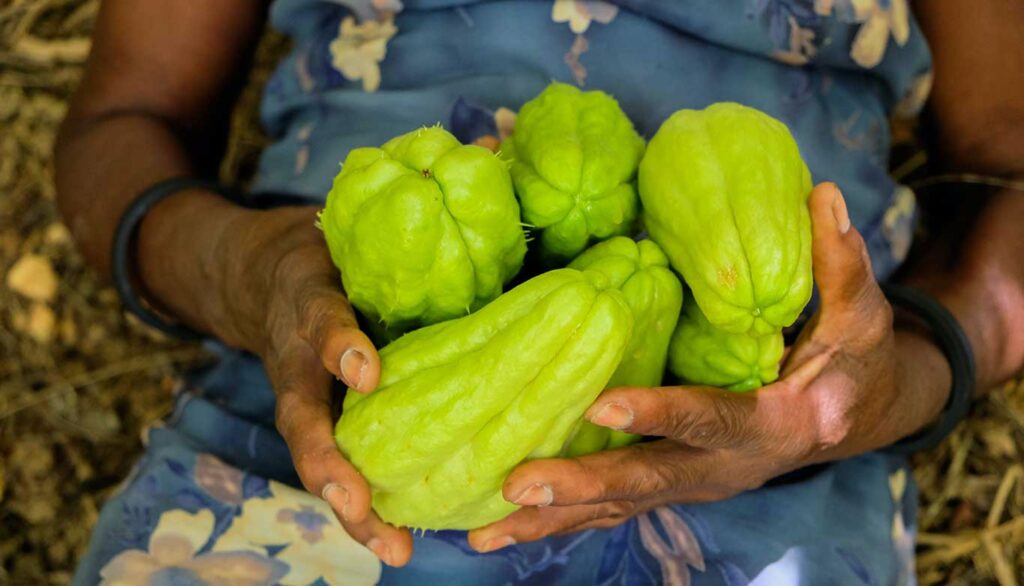
Why Grow Chayote At Home?
When you plant and grow chayote, you add a versatile vegetable to your garden and kitchen. Its mild produce works in soups, main dishes, and many everyday recipes. Furthermore, home growing gives you fresh food close to where you cook.
Chayote provides fiber, potassium, vitamins A, B, and C, plus minerals such as calcium, phosphorus, and iron. It is also low in calories and generally easy to digest.
Its fiber and low-calorie profile may suit people seeking balanced meals or trying to lose weight. Moreover, its potassium content is associated with support for healthy blood pressure. Food choices cannot replace advice from a qualified health professional.
| Chayote feature | Why it matters |
|---|---|
| Climbing growth | A trellis helps manage long vines. |
| Fiber content | It can add bulk to balanced meals. |
| Kitchen versatility | You can use it in soups and main dishes. |
| Low-calorie profile | It may fit lighter meal plans. |
How To Plant And Grow Chayote
To plant and grow chayote successfully, begin with the site, soil, planting depth, and spacing. These early choices support healthy roots and give the expanding vines enough room to develop without crowding nearby plants.
Choose A Sunny Site
Select a place that receives direct sunlight for most of the day. Chayote performs well in tropical and subtropical climates; however, it can also grow in areas with moderate temperatures.
- Choose a bright location with strong daily sun.
- Allow room for the vines to spread.
- Plan the site near a suitable trellis or support.
Prepare Fertile, Well-Drained Soil
Before planting, mix organic compost into the soil. Compost improves fertility and drainage, while good drainage helps prevent excess water from remaining around the roots.
A soil pH between 6.0 and 6.8 provides the recommended growing range for chayote. You can test the soil before planting, then adjust your preparation according to the result.
Plant Seeds Or Seedlings
Place chayote seeds about 2 centimeters deep in the soil. Alternatively, use pre-cultivated seedlings if you want to shorten the first stage of growth.
Leave at least 6 feet between plants. This spacing gives each vine room to expand and reduces competition as the plant grows larger.
| Planting detail | Recommended approach |
|---|---|
| Sunlight | Direct sun for most of the day |
| Soil pH | Between 6.0 and 6.8 |
| Seed depth | About 2 centimeters |
| Plant spacing | At least 6 feet apart |
How To Care For A Chayote Plant
After you plant and grow chayote, consistent care helps the vines remain vigorous. Focus on moisture, support, and feeding. Therefore, inspect the soil and trellis regularly instead of waiting until the plant shows stress.
Water The Soil Regularly
Water chayote regularly, especially while it grows actively. Keep the soil slightly moist, but avoid waterlogging. Excess water can leave the planting area saturated and may interfere with healthy root conditions.
- Check the soil before watering.
- Provide steady moisture during active growth.
- Stop short of creating standing or waterlogged soil.
Guide The Vines Upward
Chayote is a climbing plant, so it needs a trellis or another strong support. Guide the vines upward as they develop. Vertical growth can simplify harvesting and help protect leaves and fruit from damage.
Place the support before the vines become difficult to manage. As a result, you can direct growth earlier and make better use of the space around the plant.
Feed The Plant During Growth
Apply a balanced fertilizer during the growth and flowering stages. Use the product according to its manufacturer’s instructions. Proper timing can support vigorous development and help encourage a plentiful harvest.
Do not apply more fertilizer than the label recommends. A measured approach keeps the care routine clear and reduces the risk of improper use.
When And How To Harvest Chayote
When you plant and grow chayote under suitable conditions, harvesting usually begins about three to four months after planting. Check the fruit regularly as this period approaches, particularly when the plant produces a strong crop.
Pick chayote while it remains firm and vibrant in color. Use clean gardening shears to cut the fruit, leaving a small section of stem attached. This method helps you remove the fruit without pulling on the vine.
Harvest And Storage Guide
| Task | Best practice |
|---|---|
| Harvest timing | About 3 to 4 months after planting |
| Fruit condition | Firm with vibrant color |
| Cutting method | Use gardening shears |
| Stem | Leave a small piece attached |
| Storage | Keep in a cool, airy place for up to 2 weeks |
After cutting, store the chayotes in a cool, airy place for up to two weeks. Avoid damp, enclosed conditions. Furthermore, handle the fruit gently so it stays in good condition until you prepare it.
Common Questions About Growing Chayote
How Much Space Does Chayote Need?
Give each chayote plant at least 6 feet of space. The vines need room to expand, and adequate spacing supports easier care, better guidance, and more convenient harvesting.
What Soil Is Best For Chayote?
Use fertile, well-drained soil enriched with organic compost. A pH from 6.0 to 6.8 provides the recommended conditions for planting and growing chayote.
Does Chayote Need A Trellis?
Yes. Chayote climbs as it develops, so a trellis or other support helps the vines grow vertically. It also makes the fruit easier to reach and helps reduce damage to leaves and chayotes.
How Often Should You Water Chayote?
Water regularly during active growth and keep the soil slightly moist. However, avoid waterlogging. The goal is steady moisture without leaving the soil saturated.
How Long Until You Can Harvest Chayote?
Harvest generally takes place about three to four months after planting. Pick the fruit when it feels firm and shows a vibrant color, then cut it with shears while leaving a small piece of stem.
With patience and steady care, growing chayote can become a rewarding part of your garden routine. Sunlight, compost-rich soil, proper spacing, regular moisture, and a reliable trellis create a practical foundation for fresh chayote at home.

Lamartine P is a health and wellness researcher focused on supplements, lifestyle, and evidence-based content. He analyzes products, studies market trends, and translates complex information into practical insights to help readers make informed decisions.